From overgrown to usable
Land & Lot Clearing in Portland, Maine
Building lot that needs daylight, a view the trees swallowed, or a back acre that's gone full jungle since the nineties: clearing is the fastest transformation in tree work, when it's done selectively and legally.
Free estimates · Shoreland-zoning savvy · Fully insured
Clearing Projects We Handle
- Building lots and additions: trees, brush, and stumps off the footprint and driveway line, with the keepers protected during the work instead of scarred by it.
- View corridors: opening water or mountain views with selective removal and crown work rather than clear-cutting, which keeps the privacy screen, the property value, and (on waterfront) the legality.
- Overgrown reclamation: the back field disappearing under bittersweet, buckthorn, and popple; fencerows swallowed whole; the old orchard nobody's pruned since the Clinton administration.
- Safety and access thinning: dead and hazard trees out of the woods around the house, storm-hardening a driveway lined with aging pines, clearing for solar exposure.
- Right-of-way and pasture edges: for farms, camps, and small commercial lots throughout Cumberland and York counties.
The Shoreland Warning (Read This Before Cutting Near Water)
A huge share of Greater Portland's best property sits within 250 feet of tidal water, rivers, or ponds, which puts it inside Maine's shoreland zone, where cutting is regulated hard. Within the first 75 feet of the water there's effectively a no-touch buffer beyond limited pruning; beyond that, towns use point systems limiting how much canopy can come out per decade. Cut first and ask later and you're looking at fines plus mandatory replanting; enforcement is real, and neighbors do report. The good news: a legal, well-designed selective cut usually achieves the view and the light people actually wanted. Plan it with a crew that clears Casco Bay shorefront routinely, and get the town's sign-off in writing.
Inland, it's simpler: your lot, your trees, your timeline. Every clearing estimate is walked with flagging tape so the plan (every keeper, every removal) is agreed tree by tree before the first cut. Stumps can be ground below grade where lawn or construction follows, and any tree of real quality can be assessed by the arborist for saving before it's condemned to the chipper.
Common questions
Land Clearing FAQs
How much does land clearing cost?
It's the widest price range in tree work because "clearing" spans everything from brushing out a fencerow to taking forty trees off a building lot. Small selective projects start around what a few tree removals cost; full lot clears are priced per project after a walk-through. The free on-site estimate (with flagging tape in hand so you approve exactly what goes and what stays) is the only honest number.
Do I need a permit to clear part of my property?
Depends entirely on where the trees stand. Inland, on your own lot, most residential clearing needs no permit. But within 250 feet of the ocean, a river, or a great pond, Maine shoreland zoning strictly limits cutting (with formulas for how much canopy you can remove per lot per decade), and towns enforce it with real fines and mandated replanting. Waterfront lot? Get the rules confirmed before anyone cuts. A crew that works Casco Bay shorefront regularly knows the drill.
What happens to all the wood and brush?
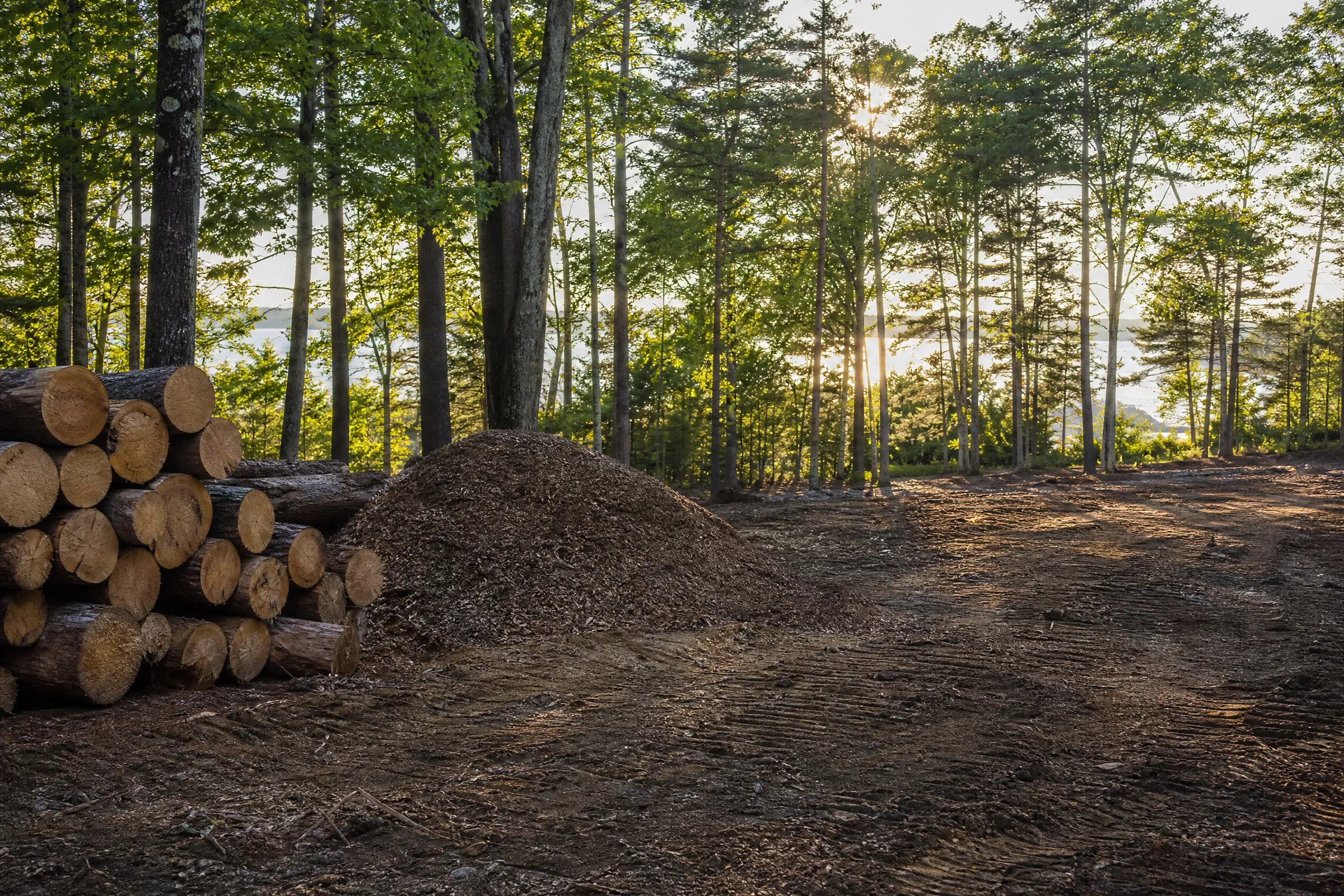
Your choice: brush gets chipped (chips hauled or left as trail/bed mulch), logs get hauled, bucked for firewood, or stacked at the landing for a log buyer if there's merchantable timber. Stumps can be ground below grade for lawn conversion or left low where woods will stay woods.
Walk the property with a pro
Free on-site estimate with flagging tape in hand: you approve exactly what goes and what stays, and the shoreland rules get checked before anything gets cut.
Call (207) 558-3036- Maine-licensed arborist crew
- Free estimates
- Fully insured tree work