Published by Portland Maine Tree Service
The Rule That Surprises Everyone
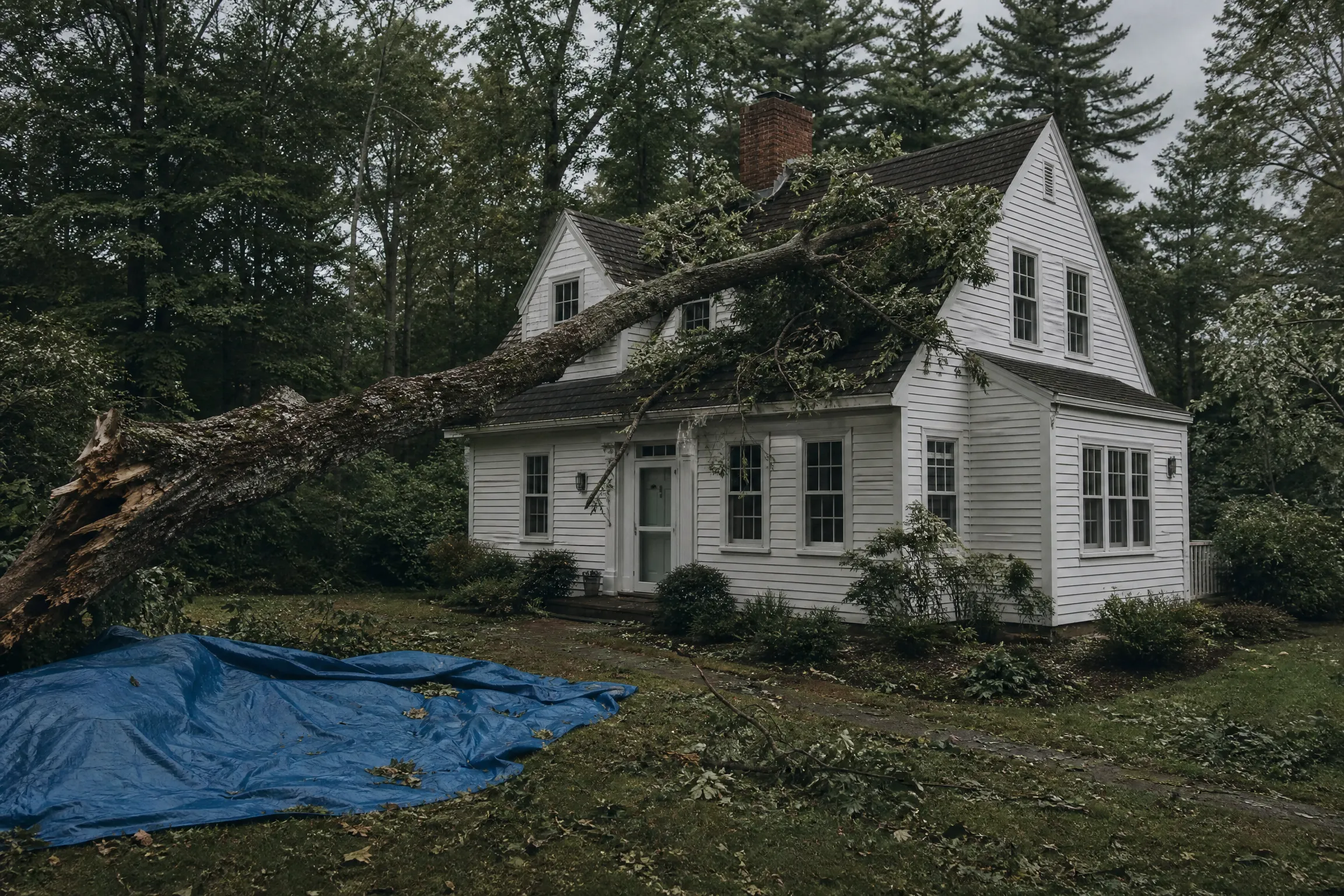
In Maine, as in most of the country, falling trees are treated as an "act of God": the damage lands on the property owner's insurance, not the tree owner's. Their healthy maple blows onto your garage in a nor'easter → your homeowner's policy covers your garage (and typically the removal from the structure), you pay your deductible, and the neighbor owes you nothing. It feels backwards, and it's the law almost everywhere.
The logic: nobody controls the wind, and a healthy tree isn't negligence. Which points straight at the exception:
The Exception: The Tree Everyone Knew About
If the tree was a known hazard (visibly dead, half-uprooted, fungus at the base, dropping big limbs) and the owner was on notice and did nothing, the picture changes. Now it can be negligence, and the tree owner (and their liability coverage) can be on the hook for the damage, sometimes including your deductible.
The operative phrase is "on notice." "I mentioned it over the fence two summers ago" is worth nothing. What works:
- A dated letter or email to the neighbor describing the specific concern, politely, with photos. Send it, keep a copy.
- A written assessment from a licensed arborist: the professional upgrade. It converts "the neighbor thinks my tree looks scary" into a documented hazard evaluation. If the owner ignores that and the tree fails, their negligence case writes itself. (How assessments work. And in Maine, "licensed arborist" is a legal credential you can verify, not a self-description.)
This works in both directions: if it's your big pine leaning over their swing set and you've received a letter like that, the cheapest thing you will ever do is deal with the tree.
What You Can and Can't Do About Overhanging Limbs
Maine follows the common-law self-help rule: you may trim branches and roots that cross onto your side, at your own expense, back to the property line, but you cannot go onto the neighbor's land without permission, and you cannot cut so aggressively that you damage or kill the tree. That last part has real teeth here: Maine's timber trespass statute (14 M.R.S. §7552) awards double or treble damages for cutting or injuring someone else's trees. People have learned this the expensive way over a view of the water. If limbs over your roof are the issue, professional clearance pruning done from your side (or better, a friendly agreement and a shared crew visit) beats freelance chainsaw diplomacy every time.
After a Fall: Who Does What
- Document everything before touching anything: wide shots, close-ups, and (important) photos of the tree's base and trunk condition. If there's visible rot, that's evidence for the negligence conversation.
- Your insurer handles your side. Structure damage, removal from structures, your deductible. Notify them promptly; see the storm cleanup guide for the first-48-hours sequence.
- Raise negligence only if you can show notice. If you have the letter or an assessment on file, give it to your adjuster; subrogation against the neighbor's policy is their department, not a fence-line argument.
- Debris usually splits at the line. Absent negligence, each owner typically clears their own side. Yes, even if it isn't your tree.
The Takeaway
Healthy tree + storm = your insurance, no villain. Known hazard + paper trail = their problem. Which means the smart move happens before the storm: put concerns in writing, get the assessment for the trees you're worried about on both sides of the line, and turn the scary pine from a future dispute into a scheduled Tuesday.