Published by Portland Maine Tree Service
The Physics: Why Ice Breaks What Wind Can't
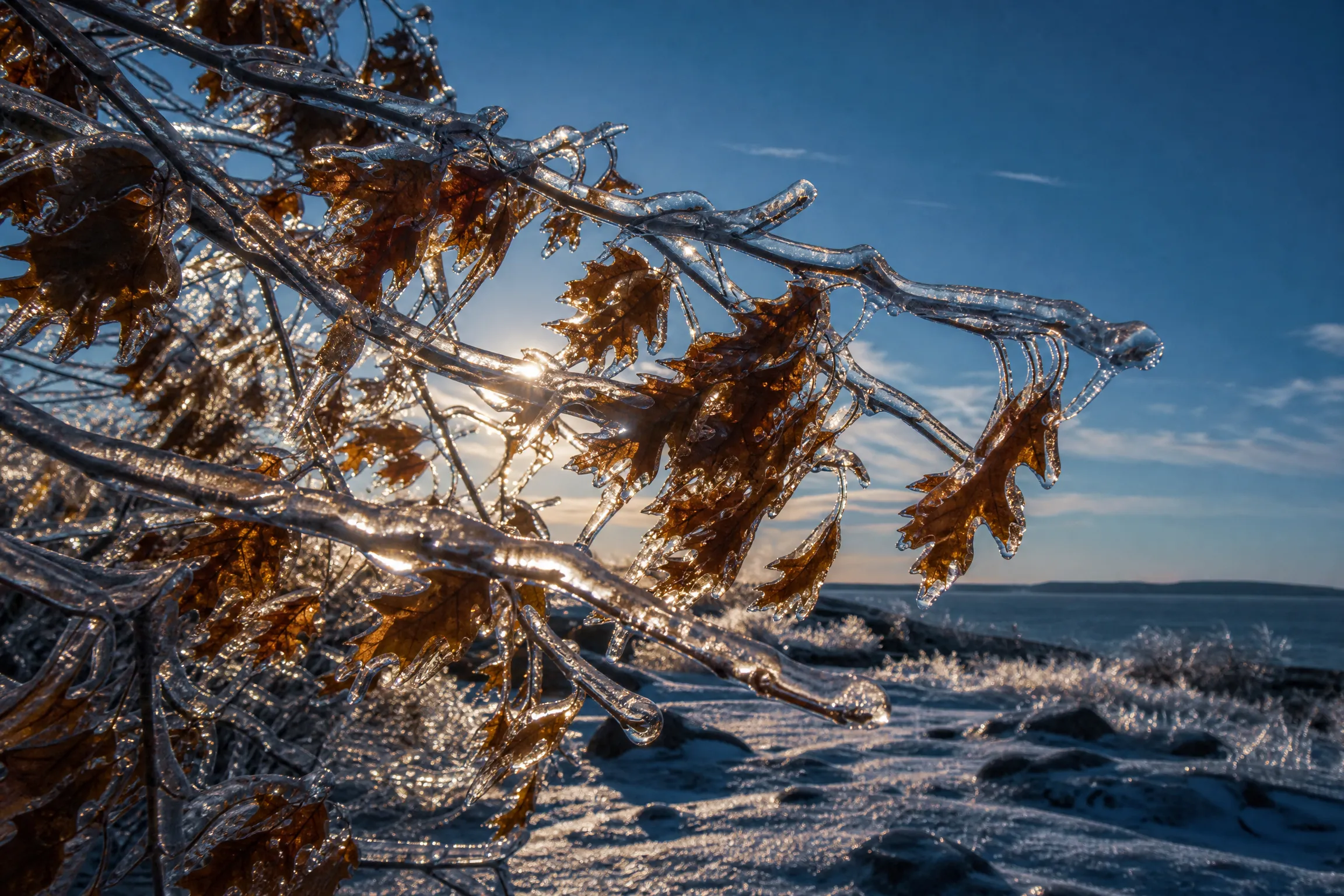
Freezing rain doesn't gust and let go like wind; it accumulates and stays. A half-inch of radial glaze multiplies a branch's weight by roughly 10 to 30 times; a big crown can be carrying several tons it wasn't engineered for, statically, for days. Add any breeze across that dead weight and limbs that have held for eighty years let go. Mainers who lived through the January 1998 ice storm (weeks of that sound like rifle shots from the woods) don't need the physics explained.
Which Trees Fail First
- Fast-growing, weak-wooded species snap: silver maple, poplar, willow, box elder. The species that grew quickly grew cheaply, and ice audits the construction budget.
- Birches bend: famously, sometimes to the ground, and young ones usually recover. An older birch bent hard by ice often doesn't stand back up; that's a spring decision, not a January one.
- White pines shed limbs: long, flat branch planes hold enormous ice loads, and mature pines drop whole limbs without much drama or warning. A big pine over the roofline is the classic Greater Portland ice-storm insurance claim.
- Trees with pre-existing conditions fail everywhere it matters: tight V-forks split down the middle, deadwood comes down first, decayed unions give way. Ice doesn't create weaknesses; it finds every one on the warning-signs list at the same time.
- Oaks and sugar maples hold best: slow, strong wood and (for oaks) crowns that often still carry leaves late get hurt too, but they're the last to go. There's a reason they're the trees your great-grandparents planted.
Before the Ice: Hardening a Yard (Fall Is the Deadline)
- Deadwood out. Every dead limb over a target is a guaranteed casualty; ice removes it for you, onto whatever's below. A pruning visit removes it onto a drop cloth instead.
- Weight and leverage off the roofline. End-heavy limbs stretched over the house are ice's favorite lever arms; reduction cuts shorten the lever while keeping the tree.
- Cable the splitters. Big co-dominant maples (the double-trunked giants) are ice storms' signature victims, and they're exactly what cabling and bracing exists for.
- Make the keep-or-remove call while it's cheap. A compromised tree over the bedroom is a scheduled winter removal (frozen ground, protected lawn) or a February emergency. Same tree, very different invoice.
During and Right After: The Don'ts
- Don't shake or knock ice off limbs. Glazed wood is brittle; the shake that "helps" is often the trigger. Ice comes off on its own schedule.
- Don't walk or park under glazed crowns: the shedding phase during the thaw drops ice and cracked limbs for hours.
- Anything touching a line belongs to CMP, and a bent birch over the service drop counts. Report it; don't free it.
- Bent evergreens: leave them. Most straighten over weeks. Cutting or shaking bent-but-unbroken trees converts recoverable trees into firewood.
- Hangers are next storm's problem delivered early: cracked limbs caught in the crown come down deliberately or they come down surprisingly. The storm cleanup guide covers the full first-48-hours sequence, including the insurance photography that pays for itself.
The Long Game
Ice is Maine's recurring audit of every crown in the yard. The trees that sail through are the ones that were pruned for structure young, deadwooded on schedule, and cabled where their architecture earned it, which is to say, ice-storm preparation isn't a product, it's just good tree care with a deadline. The deadline is the first week the forecast says "wintry mix."