Published by Portland Maine Tree Service
Why a Caterpillar Became a People Problem
Browntail moth is not a caterpillar you flick off a leaf and forget. Its body is covered in microscopic barbed hairs carrying a toxin, and those hairs are the whole issue. Contact raises an itchy, blistering rash a lot like poison ivy, and if you breathe them in while mowing, raking, or blowing leaves under an infested tree, they can irritate your airways too. The Maine Center for Disease Control tracks it for exactly that reason. Reactions range from mildly annoying to genuinely miserable, and the risk peaks from April through July, when the caterpillars are active and shedding. Worse, the hairs stay toxic in the environment for up to three years, drifting onto lawn furniture and into the grass, which is why a bad tree can make a whole backyard unpleasant long after the caterpillars are gone. If a reaction is severe, that is a conversation for your doctor; what we can do is get the source out of your trees.
Where They Are Around Portland
Browntail is a coastal Maine specialty. Populations run in patches along the coast and inland, with heavy concentrations mid-coast and up the Casco Bay islands right off Portland. Numbers rise and fall in multi-year cycles; they eased in some areas in 2025 but stayed elevated in others, which is the normal boom-and-bust rhythm of this insect and the reason a clear year is no guarantee about the next. The caterpillars favor oak above all, then apple and crabapple, then other hardwoods, which describes the exact mature shade trees standing in yards across Portland, Falmouth, Cumberland, and Yarmouth.
The Winter Web Is the Whole Game
Here is the single fact that makes browntail manageable: the caterpillars spend the entire winter bundled together in small, tough webs at the very tips of the branches. Once the leaves drop, the webs are easy to pick out against a bare sky, a fist-sized clump of a few dead leaves lashed to a branch tip with dense white silk, usually near the ends of the highest oak and apple limbs. Each of those webs holds a few hundred caterpillars dormant inside, waiting for spring. Find the webs in winter and you have found next summer's rash, all of it, in a form you can cut off and destroy before it ever hatches.
Winter Web Clipping: The One Control That Actually Works
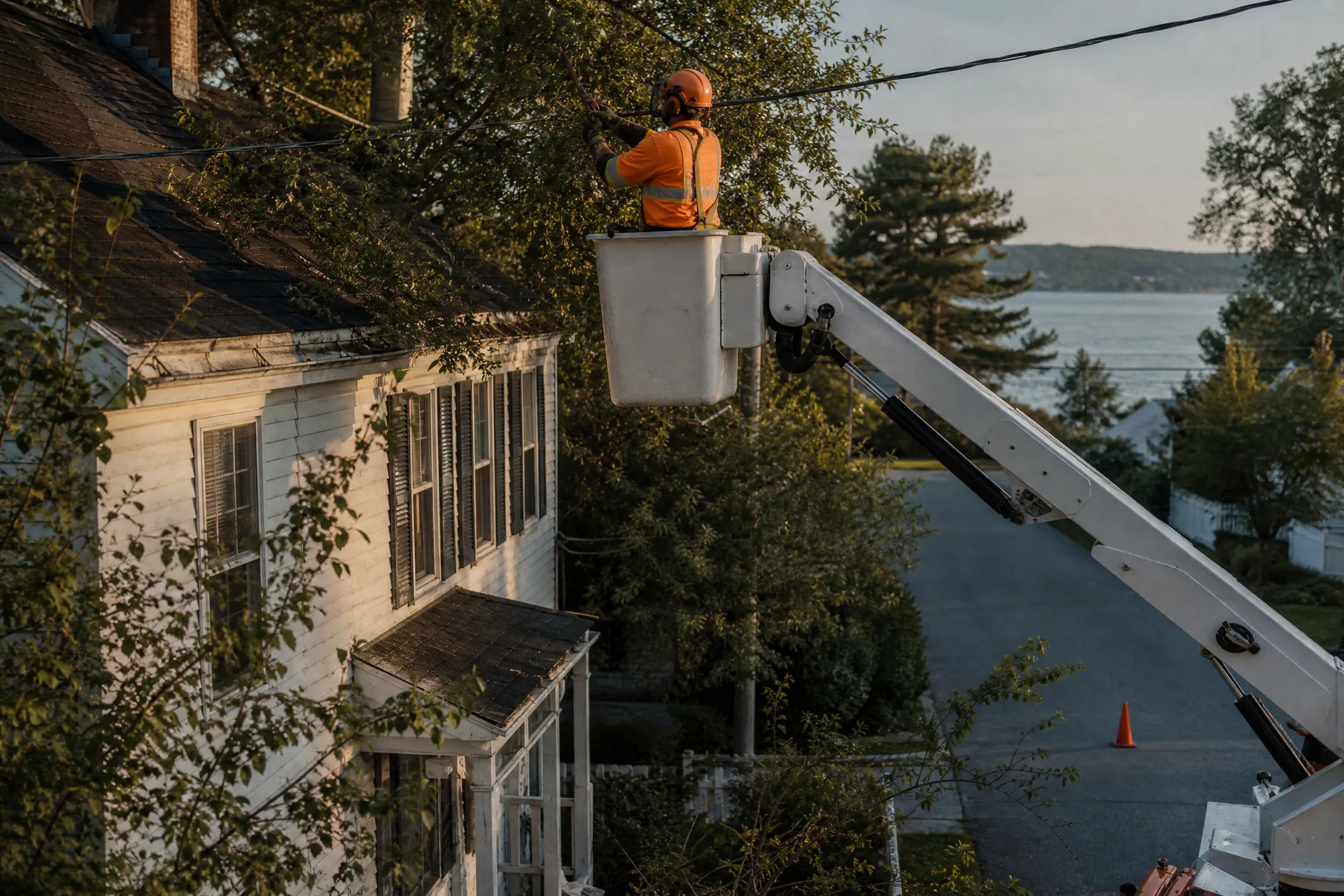
Clipping and destroying the overwintering webs is the most effective and lowest-toxicity control there is for accessible trees, and the window runs from roughly late fall through mid-April, before the buds break and the caterpillars emerge. The hairs are least active in the cold, so winter is also the safest time to handle the webs. A few webs low on a small apple tree are a homeowner job with a sharp pole pruner. The problem is that most browntail webs around here are near the top of a big oak, thirty or forty feet up and out at the branch tips, which is precisely the reach a bucket truck and a trained crew exist for. Clip every reachable web off a heavily infested oak in January and you have taken thousands of caterpillars out of your spring.
What Not to Do
- Do not clip in spring or summer. Cutting active webs when the caterpillars are out and shedding is the fastest way to coat yourself in the hairs. Winter, dormant, cold: that is the window.
- Do not leave clipped webs lying around. Destroy them. Soak them and bag them, or burn them on the ground where local rules allow, but never burn a web while it is still attached to the tree.
- Do not power-wash or leaf-blow hair-laden debris, which just launches the toxin back into the air you are breathing.
- Cover up when you handle any of it: long sleeves, gloves, eye protection, and a mask, even in winter.
When Clipping Is Not Enough
A lightly infested tree with a handful of reachable webs is a tidy winter job. A large oak carrying dozens of webs across the whole crown needs a full professional clipping, and a tree that browntail has defoliated for several summers running may be declining for good. Repeated defoliation stresses a tree the way a long illness does, and a weakened oak over the house becomes a separate safety question. If a heavily hit tree is failing, removal ends both problems at once. A licensed arborist can tell you which trees are worth clipping and which have crossed into remove territory.
The Deadline
Browntail webs are easiest to spot and safest to cut on a bare-branch winter day. By the time the rash season starts in spring, the caterpillars are out, the hairs are flying, and the window has closed for another year. Winter is the cheap, low-risk time to deal with them; spring is the expensive, itchy one. While you are thinking about southern Maine's invasive threats, the other big one goes after your trees rather than your skin: see the emerald ash borer guide.