Published by Portland Maine Tree Service
First: The Three Things That Hurt People After Storms
Storm cleanup injuries almost never happen during the storm. They happen in the sunny two days afterward, and they cluster around the same three mistakes every time:
- Downed or tangled power lines. A line wrapped in a fallen tree can be live even when your whole street is dark, and a wet tree conducts. Stay away, keep kids and dogs away, call 911 if something's arcing, and report the line to Central Maine Power. No reputable tree crew will touch a tree in the lines until the utility clears it, and neither should you.
- Trees under tension. A trunk resting on a roof, a limb pinned under another limb, a half-fallen tree hung up in its neighbor: these are loaded springs. Cutting anywhere releases forces in directions nobody chose. This is precisely the cut that takes experienced loggers to the ER, and it's the single best reason emergency tree work is a professional's job.
- Hangers, the widow-makers. Cracked limbs still caught in the crown look stable and aren't. They come down on the next gust, the next thaw, or the moment someone rakes underneath them. Walk your yard looking up before you spend a weekend working under the trees.
The Right Order of Operations
- People and structure safety. If a tree hit the house, close off rooms under the damage; framing keeps settling for hours.
- Lines to the utility. Anything involving wires goes to CMP first. Everything else waits behind that.
- Photos of everything, from safe ground. Wide shots and close-ups before a single branch moves. Your insurance adjuster wants the mess, not the cleaned-up aftermath.
- Call for triage. Describe what the tree is on, whether lines are involved, whether water's getting in. Trees on structures and blocked driveways jump the queue; a tree flat on the lawn can wait its turn, and costs less because it can.
- Tarp and board before the next rain. Good emergency crews coordinate the tree coming off with the roof getting covered; the second storm does more water damage than the first did wind damage.
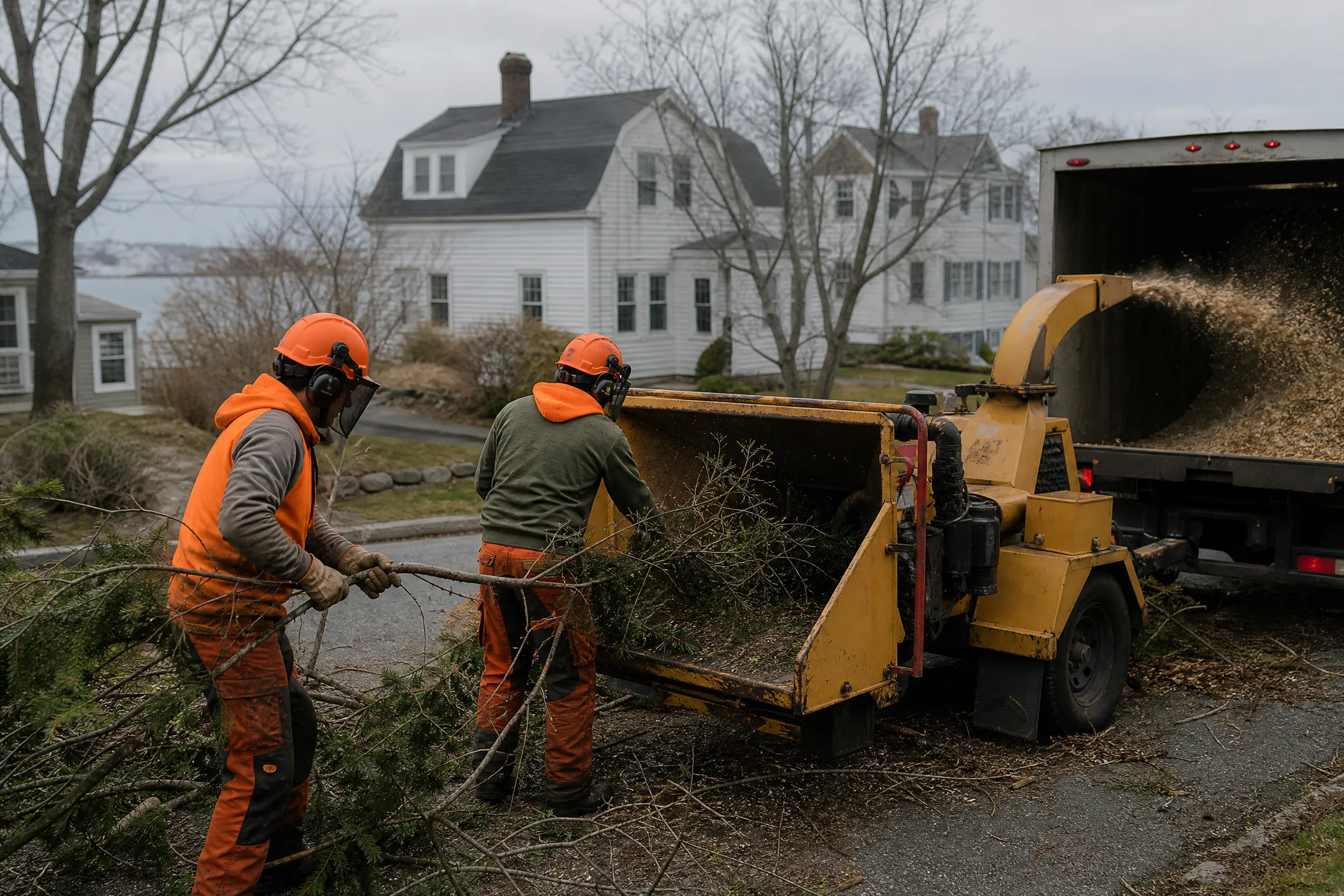
- Then the actual cleanup: sectional removal off structures, hangers brought down deliberately, brush chipped, wood bucked and stacked or hauled, and a last look at what's still standing.
How Insurance Really Works on Storm Trees
The pattern that surprises Maine homeowners: coverage follows the damage, not the tree. A storm-felled tree on your house, garage, shed, or fence is typically covered (including the cost of getting it off the structure), subject to your deductible. The same tree lying harmlessly in the yard usually gets limited debris-removal coverage or none at all. And a standing dead tree you'd been meaning to deal with? Preventive removal is on you, which is the financial argument for handling obvious hazard trees before storm season rather than after.
Whatever the situation: document before touching, keep every receipt, and get the work description in writing. Emergency work through this site includes documentation written the way adjusters want it.
What About the Neighbor's Tree on Your Lawn?
Short version: in Maine, as in most states, your insurance handles damage on your property no matter whose roots the tree grew from, with an exception for known hazards the owner ignored. The long version, with the letter that changes everything, is in the neighbor's-tree guide.
The Trees That Are Still Standing
The storm that dropped one tree stress-tested all the others. Before the cleanup crew leaves, it's worth a walk-around for new leans, lifted soil at root plates, fresh cracks at big unions, and hangers high in crowns that look fine from the kitchen window. A tree the storm half-tipped is coming the rest of the way; planned removal this week beats an emergency callout next month, and for the keepers, a licensed arborist's assessment turns "I hope it's fine" into an actual answer.